
Can a Story Have More Than One Theme? Yes—Here’s How
If you are asking, can a story have more than one theme, you are likely deep in a draft and worried you are breaking a rule. You are not. The anxiety is real: writers across Reddit joke about the “theme police” kicking down doors to confiscate extra themes, and that joke exists because so many of us were taught, somewhere along the way, that a story should have one clear message. That rule is wrong. Most stories worth reading have multiple themes, layered and sometimes even arguing with each other. This article will walk you through why multiple themes are normal, how to identify them in your own work, how to manage them without creating a tangled mess, and how many is too many.
Table of Contents
- The Short Answer: Yes, Most Stories Have Multiple Themes
- Theme vs. Topic: Why You Need a Sentence, Not a Word
- How to Identify Your Story’s Primary, Secondary, and Minor Themes
- The Danger of Too Many Themes (And How to Edit Them)
- Genre Matters: How Many Themes Fit Where?
- Practical Next Steps: A 3-Step Workflow for Your Draft
- Frequently Asked Questions
- Conclusion
The Short Answer: Yes, Most Stories Have Multiple Themes
The consensus across every corner of the writing internet is unambiguous. On Reddit, the top thread on the subject treats the question with the humor it deserves: if you think of more than one thing while writing, no one is coming for you. On Quora, one writer uses an extended analogy about a story with the single theme “apples are bad” to show how flat and unrealistic a one-note story becomes. Literature and Latte points out that a novel may examine love and identity simultaneously, and no reader blinks.
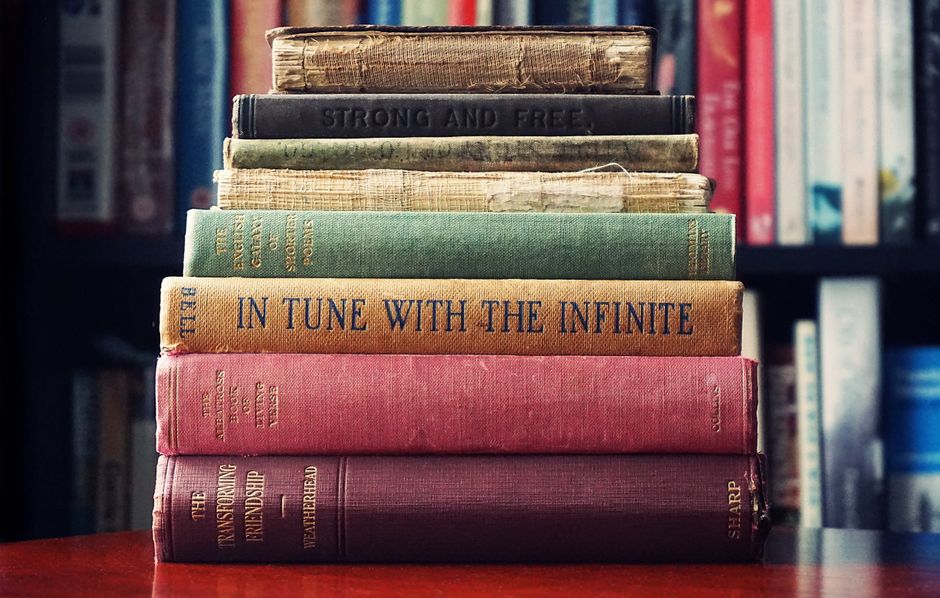
A single theme often makes a story feel like a fable or a sermon. Fables work because they are short and their simplicity is the point. A novel-length work with only one idea hammered home on every page exhausts the reader. Depth comes from layering. Even To Kill a Mockingbird, the most common textbook example used to teach theme, does not stop at “prejudice is destructive.” It also explores the loss of innocence and the complicated bond between a father and daughter. If Harper Lee had stripped out everything but the courtroom message, the book would not have endured. Multiple themes are not a flaw. They are evidence that you are writing something with texture.
Theme vs. Topic: Why You Need a Sentence, Not a Word
Before you can manage multiple themes, you have to know what a theme actually is. The most common confusion among beginning writers is mistaking a topic for a theme. A topic is a single word: justice, love, revenge, family. A theme is a complete sentence that makes an argument or asks a question about that topic. “Justice is fragile in a society built on prejudice” is a theme. “Love” is not.
This distinction matters because writers who think they have five themes often have five topics, which is a different problem entirely. A story can touch on justice, family, and identity without ever developing a coherent statement about any of them. That is not multiple themes. That is a draft that has not found its footing yet.

Bookfox, in a popular craft video with over 138,000 views, describes theme as the “vertical component” of a story. Plot and character move forward on a horizontal plane: this happens, then that happens. Theme is the vertical axis, the depth charge that asks what those events mean. If your story has only horizontal movement, it reads like a sequence of events. The vertical component is what makes readers feel something linger after the last page.
Here is a quick self-check: if you can only name your theme in one word, you have not found it yet. Push yourself to write the sentence. Once you have one sentence, ask if there is another sentence lurking underneath. That is where multiple themes begin.
How to Identify Your Story’s Primary, Secondary, and Minor Themes
Not all themes carry equal weight. Study.com offers a useful framework borrowed from literary analysis: themes can be organized into primary, secondary, and minor tiers. This hierarchy helps you see which ideas are load-bearing and which are decorative.
A primary theme is the central argument or question your story cannot escape. If you removed it, the entire structure would collapse. In To Kill a Mockingbird, the primary theme is something like “prejudice corrupts justice and destroys innocent lives.” That idea is present in the trial, in the town’s treatment of the Radleys, and in Scout’s education at school. It is everywhere.
A secondary theme runs parallel to the primary one. It supports and complicates the main idea without stealing focus. In the same novel, the loss of innocence is a secondary theme. Scout and Jem start the book as children who believe the world is fundamentally fair. By the end, they know better. That theme deepens the primary one: prejudice is not just a social problem, it is something that forces children to grow up too fast.
Minor themes are brief explorations that add texture. The father-daughter relationship between Atticus and Scout is a minor theme. It matters, it enriches the story, but if you removed it, the novel’s core argument about prejudice would still stand.
To find your own hierarchy, ask a blunt question about each candidate theme: if I removed this idea entirely, would the story collapse? If the answer is yes, it is primary. If the story would survive but feel thinner, it is secondary. If the idea adds flavor but is not essential, it is minor. This exercise alone can rescue a draft that feels thematically cluttered.
Using Character, Plot, and Villain to Surface Themes
Themes do not float above a story like a cloud of abstract ideas. They live inside specific story elements. Jami Gold, a writing craft blogger, offers a practical framework for locating themes by looking at different parts of your narrative.
Character themes emerge from what the protagonist learns, or fails to learn, over the course of the story. If your main character starts out believing that power comes from control and ends up learning that power comes from letting go, that arc is a theme. If they stubbornly refuse to learn and are punished for it, that is also a theme.
Plot themes live inside the central conflict. Ask yourself what the fight is really about. A thriller about a detective hunting a serial killer might be, on the surface, about catching a murderer. But if the detective keeps bending rules and the killer keeps exploiting them, the plot theme might be “the line between justice and vengeance is thinner than we admit.”
Villain themes are often the most overlooked. The antagonist has a philosophy, and that philosophy is usually a counter-theme to the protagonist’s worldview. If your hero believes in mercy, your villain might believe mercy is weakness. The clash between those two ideas is where thematic tension lives. A story with multiple themes often has multiple thematic arguments happening at once, and the villain is one of the loudest voices in that debate.
Choices themes reveal themselves in the hardest decisions a character makes. When a character is forced to choose between two things they desperately want, the choice they make tells the reader what the story truly values. If a character chooses loyalty over ambition, the story is arguing something about loyalty, whether you intended it or not.
The Danger of Too Many Themes (And How to Edit Them)
Multiple themes are good. Too many themes are a problem. No research-backed number exists for the optimal count, but Bookfox suggests that if you find more than three major themes in a novel-length manuscript, it is time to edit and shape the work. That guideline passes the common-sense test. A reader can hold two or three big ideas in their head over four hundred pages. Ask them to track six, and they will finish the book unsure what it was about.
The “kitchen sink” problem is real. When a writer throws every idea they have ever had into one manuscript, the emotional impact dilutes. A story that is about grief, and also about climate change, and also about the gig economy, and also about sibling rivalry, and also about the nature of art, is not a rich tapestry. It is a crowded room where no single voice can be heard clearly. The reader leaves overstimulated and under-moved.
Conflicting themes are a subtler danger. If one thread of your story argues that revenge is justice and another thread argues that forgiveness is strength, you have created a contradiction. That is not automatically bad. Contradictions can be fertile ground for drama. But the story must resolve that tension somehow, or at least acknowledge it. Simply presenting both ideas without engaging the conflict between them reads as sloppy thinking. The reader will sense that the author has not made up their mind.
After finishing a first draft, try this editing exercise. Read through the manuscript and list every theme you can find, phrased as a full sentence. Be honest. Include the ones you did not plan. If your list has more than four items, look for themes that overlap and can be combined. Look for the weakest one, the idea that appears in only one subplot or one character’s arc, and consider cutting it. Your goal is not to reduce the story to a single message. It is to make sure every theme you keep earns its place.
How to Handle Conflicting or Unintended Themes
Jami Gold notes that themes can emerge unconsciously and undermine a story if left unexamined. This is a gap in most writing advice: everyone tells you to look for themes, but few tell you what to do when you find ones you did not put there on purpose.
Unintended themes often come from subconscious biases. A protagonist who is always right, whose instincts are never questioned, and who is rewarded for ignoring advice may accidentally promote a theme of arrogance. The writer did not set out to argue that arrogance is good. But the pattern is there on the page, and readers will notice. The fix is not to scrap the character. It is to notice the pattern and decide whether to lean into it, complicate it, or quietly revise.
Conflicting themes can be a source of dramatic tension rather than a flaw. If your story contains two ideas that seem to oppose each other, let the protagonist wrestle with that contradiction. A character who believes both that loyalty is sacred and that self-preservation is necessary has an internal conflict that mirrors the thematic conflict. The story does not need to pick a winner. It needs to take the conflict seriously.
Bookfox offers a helpful reframe: themes do not have to be convictions. They can be questions. Elie Wiesel’s Night does not answer the question “how do you maintain humanity in the face of overwhelming inhumanity?” It asks it, relentlessly, and the asking is the point. If your themes are in tension, consider whether your story is better served by posing a question than by delivering an answer. A novel that explores a difficult question honestly is often more powerful than one that pretends to have solved it.
Genre Matters: How Many Themes Fit Where?
No organic search result provides a detailed genre breakdown, but the People Also Ask section hints that literary fiction, epic fantasy, and historical fiction benefit from multiple themes more than other genres. The logic is straightforward: these genres promise depth and complexity, and readers come to them expecting layered meaning.
Literary fiction and epic fantasy can comfortably hold two to three major themes. The scope of these stories is large, the word counts are generous, and the audience is patient. A literary novel about a family breaking apart can explore grief, class, and the unreliability of memory without feeling overstuffed. An epic fantasy with a sprawling world can examine power, sacrifice, and the cost of prophecy in parallel.
Thrillers and romance operate under different constraints. Pace and focus are critical. A thriller that pauses for extended thematic reflection loses tension. A romance that wanders away from the central relationship to meditate on environmental degradation risks frustrating readers who came for the love story. These genres often work best with one strong primary theme and one secondary theme. The primary theme carries the emotional weight. The secondary theme adds a layer of interest without slowing the momentum.
Middle grade and young adult fiction typically stick to one or two clear themes. Younger readers are still developing the cognitive skills to track abstract ideas across a long narrative. That does not mean the themes must be simplistic. A YA novel can tackle identity and belonging with real nuance. But adding a third major theme often pushes the book beyond what the audience can hold in their heads.
Short stories have almost no room for layering. One theme, explored with precision, is usually the maximum. A short story that tries to do the thematic work of a novel feels rushed and shallow. The form rewards focus.
Practical Next Steps: A 3-Step Workflow for Your Draft
If you are holding a draft and wondering what to do with all the themes you have discovered, here is a workflow that respects how writers actually work.
Step one: finish the draft. Do not try to force themes early. Bookfox notes that most writers discover their theme three-quarters of the way through the first draft, or even after they finish. This is normal. Theme emerges from the accumulated choices you make while writing. You cannot engineer it from an outline alone. Give yourself permission to write the whole thing before you start diagnosing what it means.
Step two: audit the draft using the hierarchy framework. Read through the manuscript and write down every potential theme as a full sentence. Rank them. Identify which one is primary, which are secondary, and which are minor. Be ruthless. If a theme appears in only one scene, it might not be a theme at all. It might just be a moment.
Step three: weave the primary theme through the story’s structural pillars. Make sure it is present in the opening scene, the midpoint crisis, and the climax. These are the moments readers remember most clearly, and they are where your thematic argument needs to be sharpest. Secondary themes can live in subplots and character arcs. Minor themes can surface briefly and recede. The goal is not to make every theme equally loud. It is to make sure the primary theme is never drowned out.
Frequently Asked Questions
Can a story have two main themes?
Yes, but one usually dominates. Think of them as a lead singer and a backup vocalist. Both are audible, both matter, but the listener knows who is carrying the melody. If you try to make two themes exactly equal, the reader may struggle to identify what the story is ultimately about.
Do themes have to be intentional?
No. Many of the best themes are discovered in revision. Unintentional themes can be the most powerful because they come from somewhere honest in the writer’s mind. The key is to recognize them once they are on the page and decide whether to develop them or edit them out.
How do I know if I have too many?
If a beta reader says “I’m not sure what this story is about,” you likely have too many competing ideas. That phrase is a red flag. It means no single theme is strong enough to register clearly. Go back to the hierarchy exercise and cut until something rises to the top.
Conclusion
You have permission. Multiple themes are not a mistake. They are a sign that your story has depth, that you are thinking about more than one thing, that you are writing something closer to life than to a fable. The question is not whether you are allowed to have more than one theme. The question is whether your themes are talking to each other or past each other.
Stop worrying about the theme police. They do not exist. What exists is the draft in front of you, full of ideas you may not have planned and connections you may not have noticed yet. Revisit that draft with the hierarchy framework in mind. Find your primary theme and make it sing. Let the secondary themes harmonize. Cut the ones that are just noise. Your story will be stronger for it, and your readers will feel the difference.


